What Makes a Porta Potty ADA Accessible?
It is not just a bigger box. The specs come from the ADA Standards, and they matter for anyone renting ADA accessible porta potties in West New York. Standards section 404.2.3 sets the clear door opening at 32 inches minimum, wide enough for a wheelchair to pass through without a fight. Inside, section 304.3.1 requires a 60 inch diameter turning circle so a user can maneuver and reposition. The floor has to meet section 302.1: stable, firm, slip resistant, no give underfoot. Reach matters too. Section 308.2.1 caps the forward reach at 48 inches high and 15 inches low, which is why the paper holder and any controls sit lower than on a standard unit. Door handles and latches fall under section 309.4: operable with one hand, no tight grasping or twisting, and no more than 5 pounds of force to open. Compare that to a standard porta potty rental, which skips all of it because it is not built for wheelchair access. If your event or crew includes anyone using a mobility device, this is the difference between compliant and exposed.
How Many ADA Units Do I Need in West New York?
The rule of thumb comes straight from ADA Standards section 213.2: where portable toilets are clustered, at least 5 percent of the units must be accessible, and you need one even if your math rounds down to zero. Ten standard units on a West New York job site means one ADA unit, minimum. Twenty-five units still might only require two. This stacks on top of the general count from OSHA 1926.51(c), which sets toilet ratios for construction crews: one facility for 20 workers or fewer, then one toilet seat and one urinal per 40 workers as the crew grows past that. Figuring out the right total for a mixed crew, or for event restrooms in West New York, is easier with a quick call than a spreadsheet. Use our porta potty calculator guide as a starting point, then confirm the accessible count separately since it is a percentage of the whole, not an afterthought tacked onto the order.
Where Should ADA Units Be Placed?
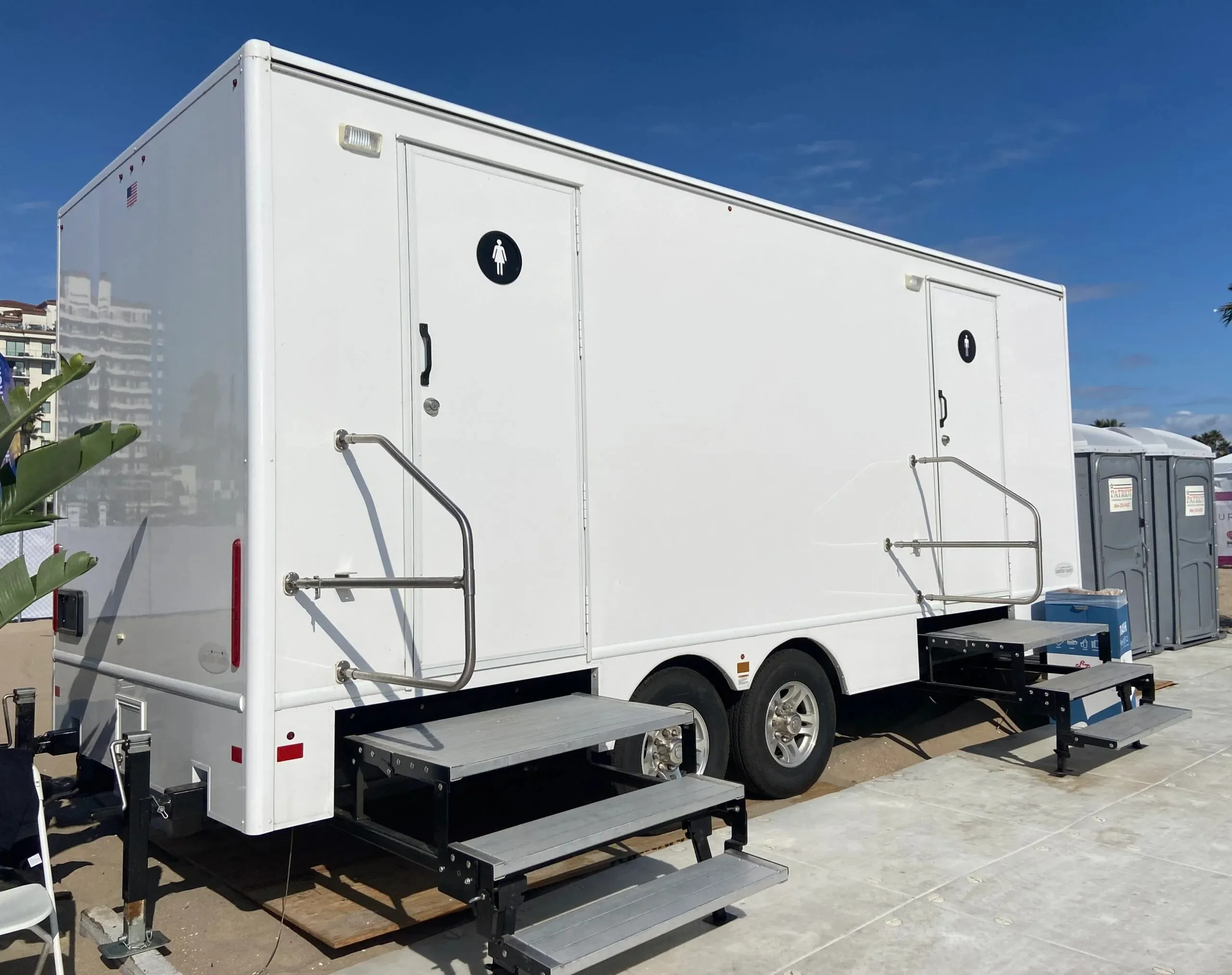
Placement is where most rentals go wrong, even when the unit itself is compliant. The unit needs a level, stable surface per section 302.1, and the path to it needs 36 inches of clear width under section 403.5.1, so no equipment staging, no cords, no debris pile blocking the route. If the ground slopes at all, any ramp built to reach the unit cannot exceed a 1:12 slope under section 405.2. That is a long ramp for even a modest curb, so flat, direct placement beats a workaround almost every time. Our porta potty placement guide covers ground clearance and delivery access in more depth. For West New York job sites near sidewalks or building entrances, we walk the site before drop-off. Delivery trucks need roughly 60 feet of straight clearance to spot a unit, which matters on tighter blocks. If you are also renting a restroom trailer for an event, the same access rules apply, just at trailer scale, and an 8 stall restroom trailer needs more clearance than a single ADA unit.
Do I Need ADA Units for a Private Event?
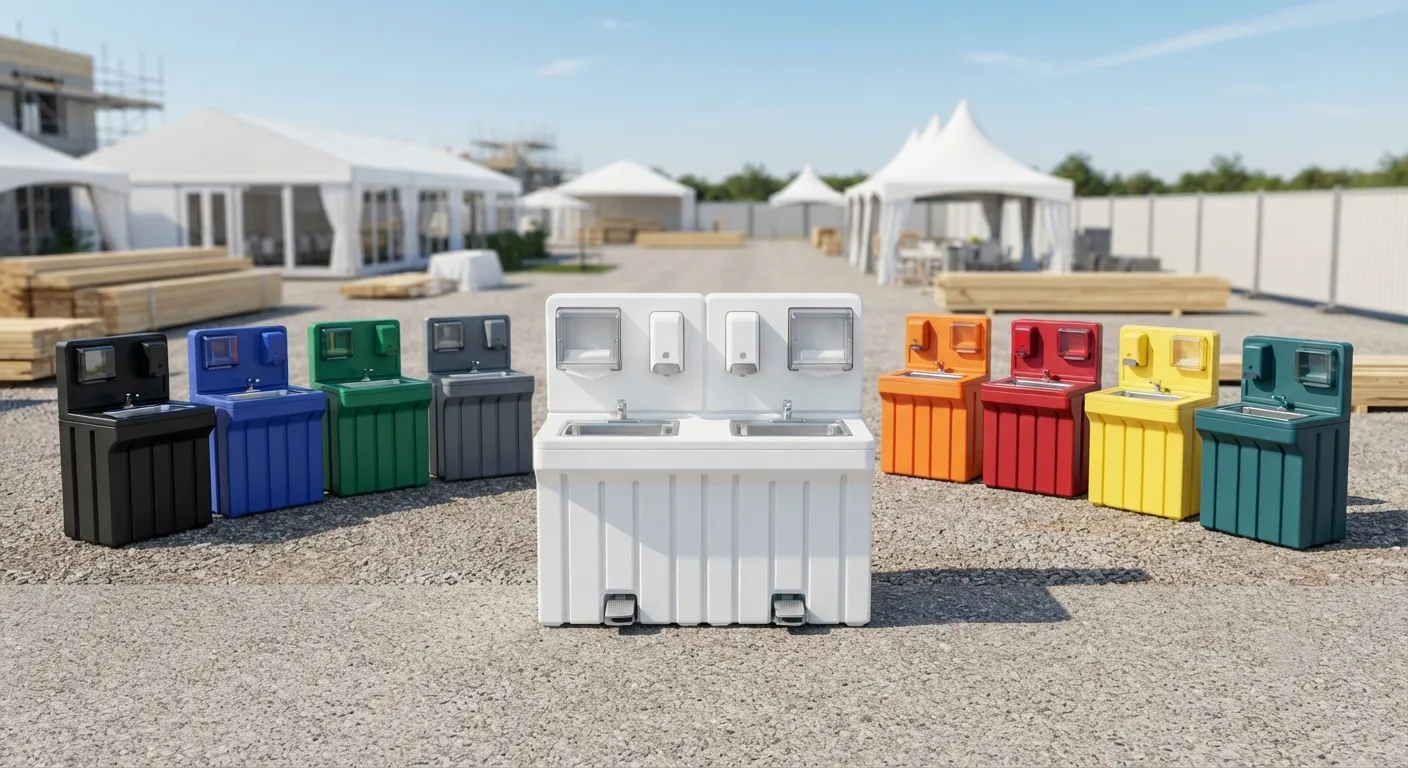
Not always by law, but most venues and permit offices in West New York expect at least one accessible unit on-site regardless of guest count. It is also just the right call if any guest, vendor, or crew member uses a mobility device. A wedding restroom rental or a festival restroom rental package should include at least one ADA unit as a baseline, not an add-on you request after someone asks. Handwashing counts too: 29 CFR 1910.141(d)(2) requires soap and towels or a hand-drying device at wash stations, and hand sanitizer alone does not satisfy that. If your event pairs restrooms with a handwashing station rental in West New York, make sure it is stocked, not just present. Confirming exact placement in a public right of way, sidewalk, or park still needs a check with the city, since local rules vary by location and were not something we could verify block by block. For weddings, festivals, or company picnics anywhere from Weehawken, 1.6 miles south, up toward Cliffside Park, 3.1 miles northeast, the accessible unit question comes up the same way every time: better to have it than to explain its absence.
Do all portable toilets need to be ADA accessible?
No. Only a percentage of a cluster needs to be accessible under ADA Standards section 213.2, at least 5 percent and never fewer than one. A single standalone unit for a small crew or backyard project usually does not trigger the requirement at all.
What size is an ADA porta potty compared to a standard unit?
An ADA unit is noticeably roomier inside to fit the required 60 inch turning circle. A standard porta potty runs about 44 by 48 inches on the ground and 92 inches tall; the ADA version needs extra interior floor space to meet that turning radius.
How much does an ADA portable toilet rental cost in West New York?
Daily ADA rentals run from around $200 to $400 depending on duration and add-ons, with weekly rates typically lower per day than a single-day rental. See our porta potty rental cost guide for the full breakdown by unit and duration.
Can I rent just one ADA unit without renting standard units too?
Yes. Plenty of small West New York job sites and backyard events rent a single ADA unit on its own. Check our portable toilet rental page for standalone options, or ask about pairing it with a deluxe flushable unit for guest comfort.
Who do I contact to confirm ADA placement rules for my address?
We recommend confirming right-of-way and sidewalk placement directly with West New York's local offices before delivery day, since those rules are not standardized citywide. Our crew can still advise on clearance and access; request a quote and we will talk through the site specifics with you.
Next step
Get a delivery date
Tell us the address, the dates and the headcount. We size the order and confirm the route.