What does OSHA require for handwashing on a job site?
The rule that gets misquoted most is 1926.51(f)(1). It is not a blanket handwashing mandate for every construction site in West New York. It applies specifically where crews are applying paints, coatings, herbicides or insecticides, or working around other harmful contaminants. If your crew fits that description, you need a washing facility on site, full stop. For everything else, general sanitation falls under OSHA portable toilet requirements and 1926.51(c), which sets toilet counts by crew size: one facility for 20 workers or fewer, then one toilet seat and one urinal per 40 workers as headcount climbs, dropping to one per 50 once you hit 200 workers. Pair your handwashing station rental with your toilet count and you cover both rules at once. A lot of contractors around Weehawken, 1.6 miles south of West New York, order both together for exactly this reason.
Does hand sanitizer count as handwashing under OSHA?
No. 29 CFR 1910.141(d)(2) is explicit: washing facilities need soap and towels or a hand drying device. A sanitizer stand alone does not meet that standard, even though it is better than nothing for a quick site visit. If your project falls under general industry rules rather than construction, this is the citation your safety officer will ask about. A portable sink rental with real soap and paper towels satisfies the letter of the rule. A hand sanitizer station rental is a fine supplement near a portable toilet rental cluster or a break area, but it should not be your only station if inspectors are checking boxes. Agricultural operations have their own version of this under OSHA 1928.110, which calls for potable water, toilets and handwashing within a quarter mile walk for hand-labor employees, at a ratio of one facility per 20 workers.
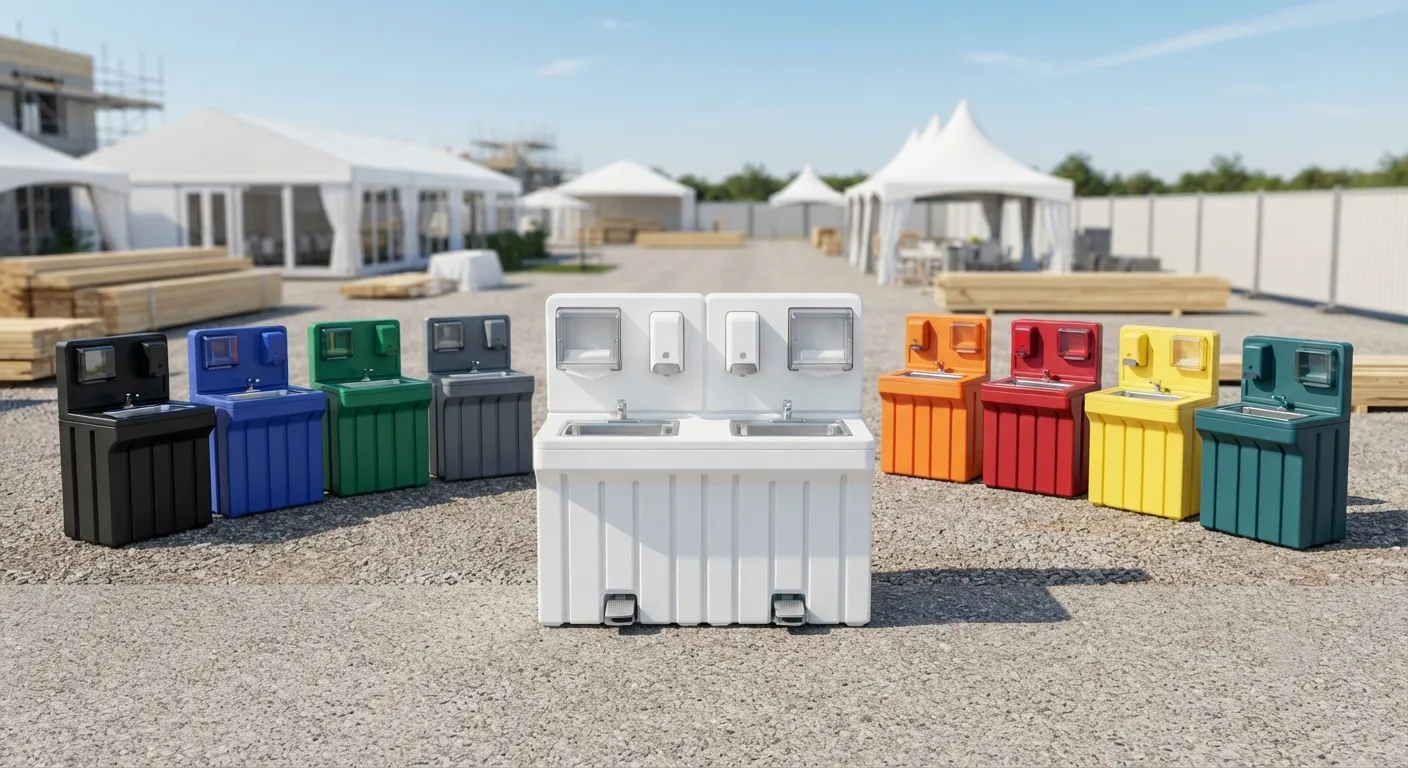
How many handwashing stations does a West New York job site need?
Match your handwashing count to your toilet count, and match your toilet count to crew size under 1926.51(c). A 15-person crew in West New York needs one toilet facility and, if contaminants are in play, one paired handwashing station within reasonable walking distance. Add crews past 20 workers and the math shifts to one toilet seat and one urinal per 40. Use how many porta potties do I need to run the numbers for your specific headcount before you call in an order. Delivery in West New York typically needs about 60 feet of straight clearance behind the truck, so confirm your site layout works before the truck shows up. Crews near Secaucus, 5.7 miles west of West New York, often bundle handwashing with construction site services rather than order them separately, which simplifies scheduling and cuts down on delivery fees.
Where should handwashing stations be placed on site?
Placement rules borrow heavily from ADA accessibility standards even on sites without a formal ADA obligation, because they represent sound practice for keeping a station usable. ADA Standards section 403.5.1 calls for a minimum 36 inch clear route to any accessible unit, and section 304.3.1 requires a 60 inch turning circle at accessible fixtures. If your site clusters multiple standard porta potty rental units, ADA Standards section 213.2 requires at least 5 percent of clustered single-user units to be accessible, and never fewer than one. Pair that accessible unit with an ADA accessible porta potty placement plan and put the handwashing station within the same clear path. Consult the porta potty placement guide and check City Code requirements with West New York before finalizing locations in the public right of way, since placement rules there still need confirming with the city directly.
| unit | duration | typical price |
|---|---|---|
| standard | day | $150 |
| standard | week | $200 |
| standard | month | $200 |
| ada | day | $230 |
| ada | week | $185 |
Weekend rates for a standard unit in West New York run higher than the weekday day rate, since weekend service is a short-notice premium booking. Budget accordingly if your event or project falls on a Saturday or Sunday.
Contractors managing bigger footprints often add a temporary fence rental around the sanitation cluster to keep foot traffic controlled, and a light tower rental if crews work early or late. For food service operations nearby, a grease trap pumping schedule matters too. A grease interceptor typically needs pumping once fats, oils, grease and solids reach 25 percent of the liquid depth, which is worth tracking alongside your handwashing plan if your site includes a kitchen trailer or food truck. Review the full porta potty rental checklist before your next West New York project kicks off, and check OSHA portable toilet requirements again if your crew size changes mid-job.
Do I need a handwashing station if I already have hand sanitizer on site?
Sanitizer does not replace a proper washing facility under 29 CFR 1910.141(d)(2), which calls for soap and towels or a hand drying device. Use sanitizer as a supplement near your portable restroom rental setup, not a substitute.
What is the OSHA rule for handwashing after using pesticides?
1926.51(f)(1) requires washing facilities where crews apply paints, coatings, herbicides or insecticides. This is contaminant-specific, not a general mandate, so confirm what your crew is actually doing before ordering.
Can one handwashing station serve multiple porta potties?
Yes, as long as it sits within reasonable walking distance of the cluster and meets soap-and-towel requirements. Most West New York job sites pair one station per toilet cluster rather than one per unit.
How far should handwashing stations be from work areas?
There is no fixed distance in the FACT BANK for construction handwashing, but ANSI/PSAI Z4.3 sets a weekly service baseline for portable sanitation that assumes stations stay reasonably close to where crews work.
Does a restroom trailer need a separate handwashing station?
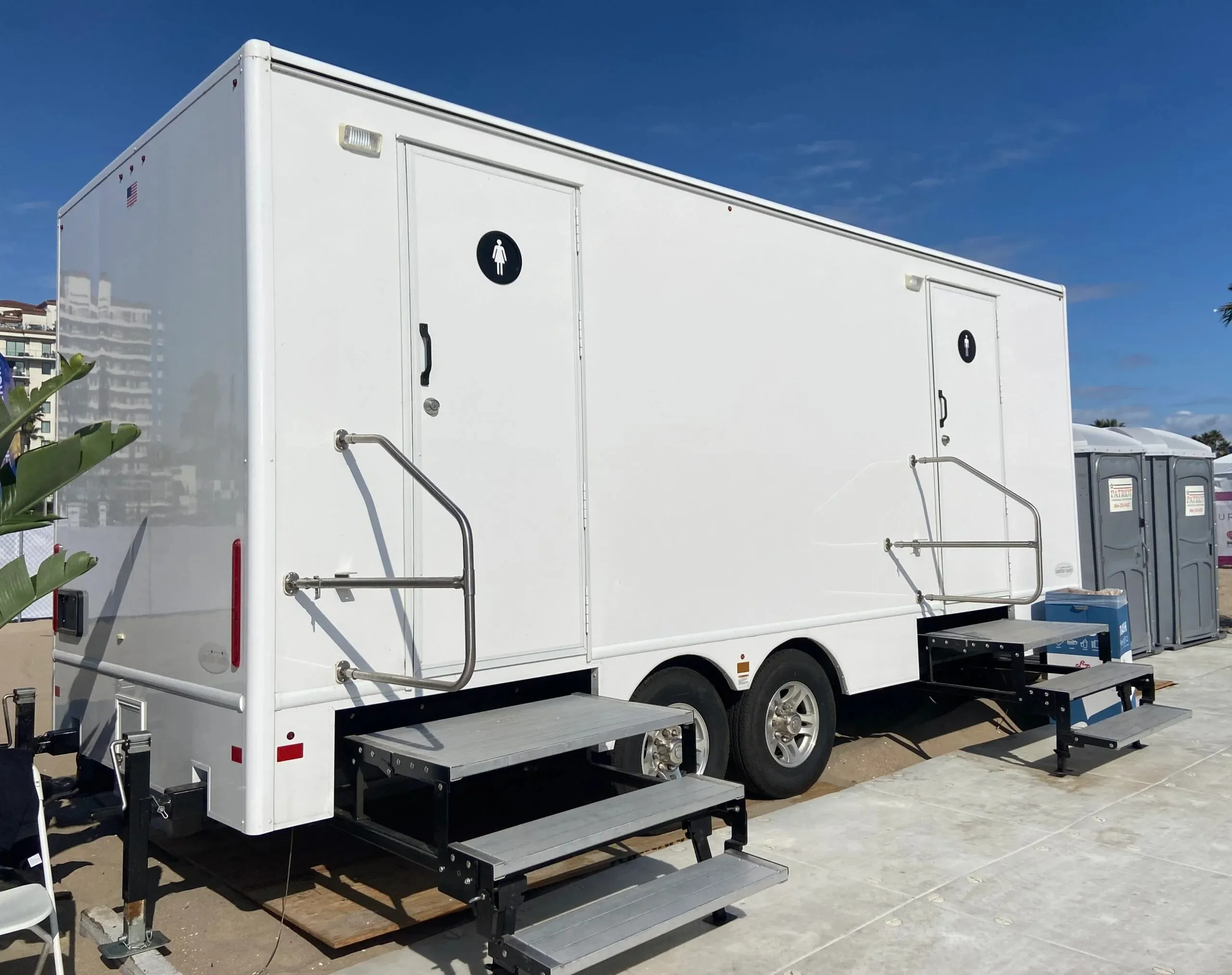
Most restroom trailer rental units include built-in sinks, so a separate station usually is not needed. Confirm sink count against your crew size before assuming it covers everyone on site.
Next step
Get a delivery date
Tell us the address, the dates and the headcount. We size the order and confirm the route.