
What Does OSHA Require for Portable Toilets on a Construction Site?
OSHA portable toilet requirements for construction sites come down to one ratio: one seat per 20 workers, scaling up as the crew grows. Cal OSHA portable toilet requirements for construction sites in California follow the same federal ratio, and a contractor running a construction portable toilet rental near Texas or a construction portable toilet rental near California job site should plan against the same OSHA 1926.51(c) numbers used here, since the federal standard does not change by state.
What Does a Construction Job Site Need for Sanitation?
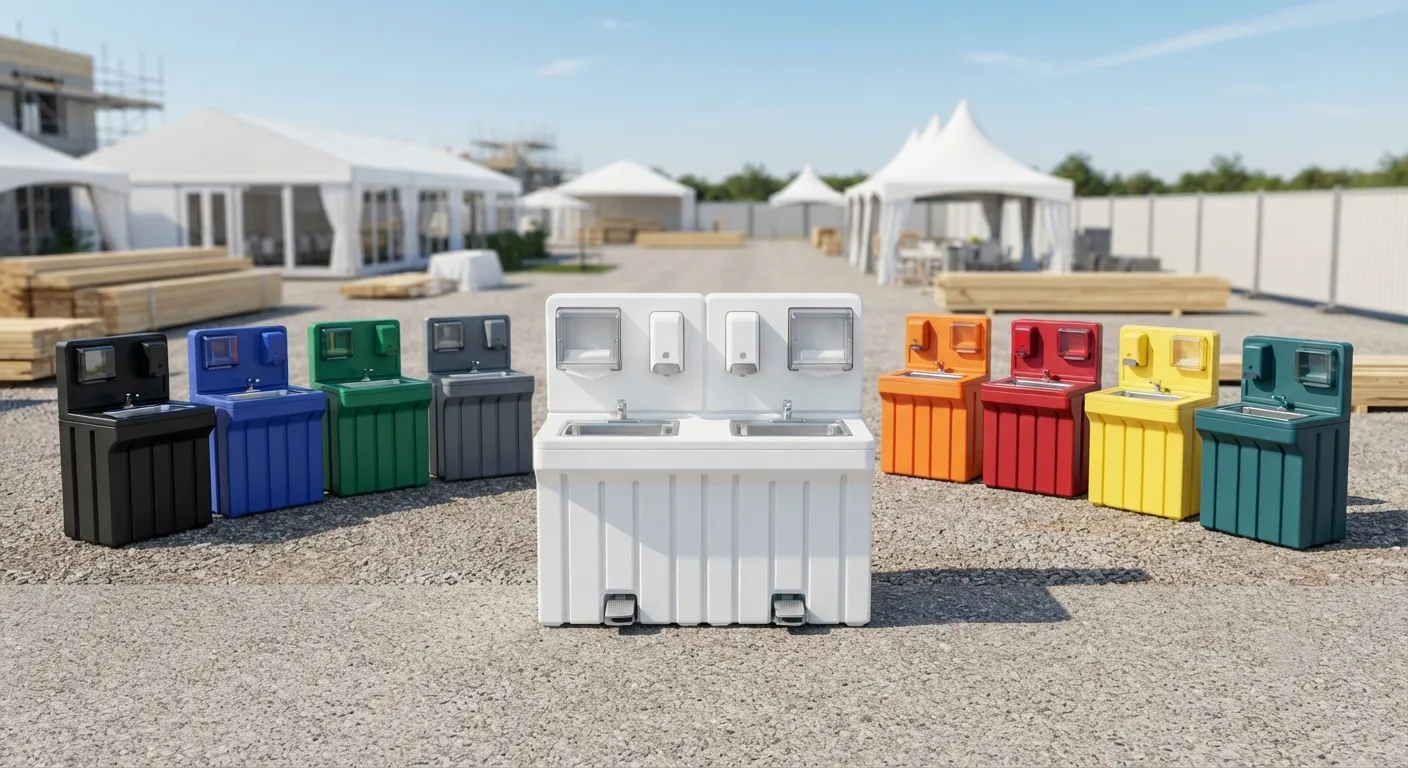
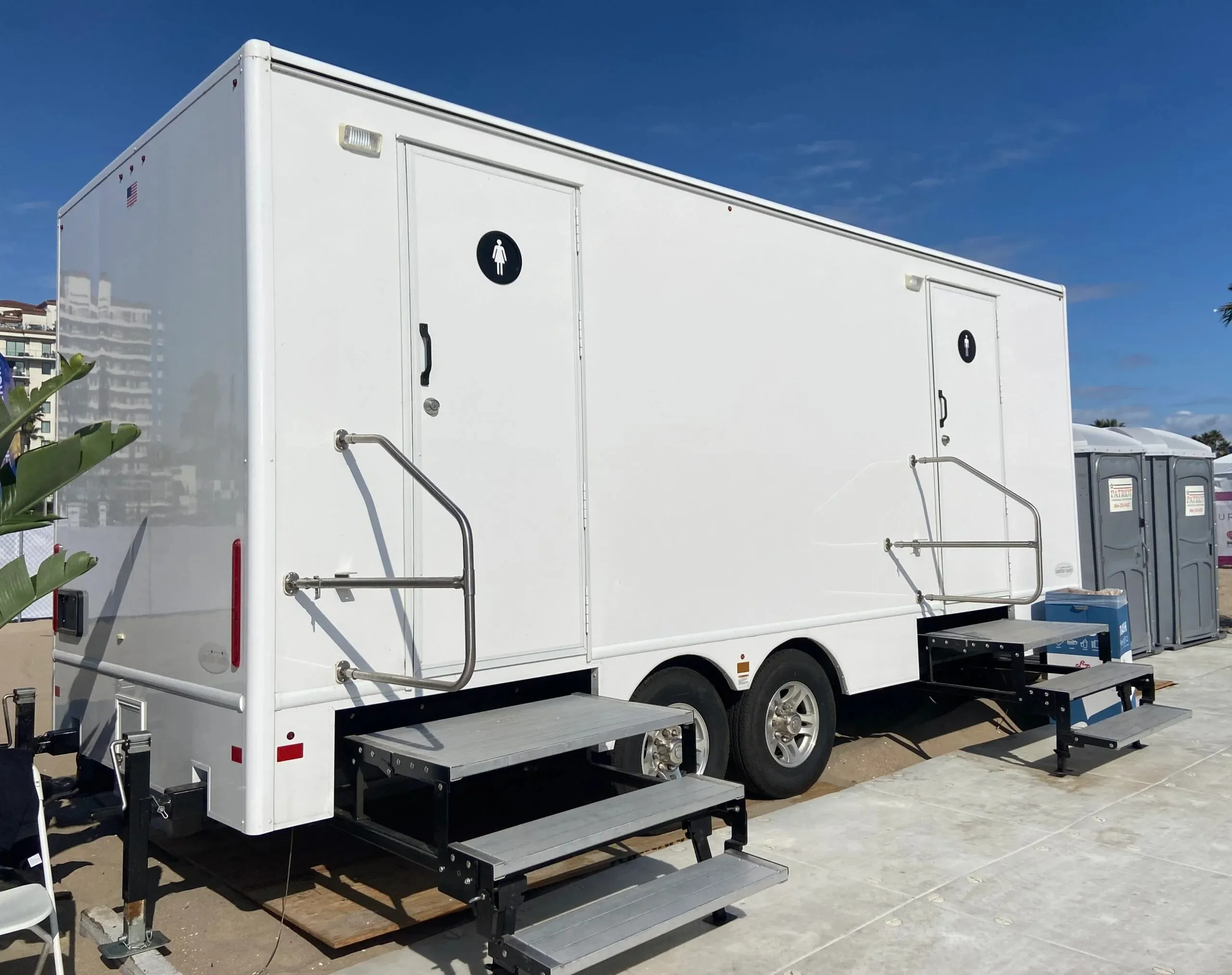
Every general contractor working in West New York needs a plan for toilets, water and waste before crews break ground. OSHA 1926.51(c) sets the baseline: one toilet seat for 20 or fewer workers, then one seat and one urinal per 40 workers as the crew grows, dropping to one per 50 once you pass 200 people on site. OSHA 1926.51(a)(1) also requires an adequate supply of potable water at every place of employment, which is why a lot of superintendents pair portable toilet rental with a handwashing station rental on day one instead of waiting for an inspector to ask. A standard porta potty rental covers most crews. Larger builds add a 4 stall restroom trailer or 8 stall restroom trailer once headcount climbs. Debris rules apply too. OSHA 1926.25 requires scrap and debris cleared from work areas, and a roll-off dumpster rental or construction dumpster rental handles that without a truck idling curbside. If the crew is spraying paint, coatings or applying herbicides or pesticides, OSHA 1926.51(f)(1) requires washing facilities for that specific exposure, not just a sink for lunch breaks.
How Many Portable Toilets Does a Construction Site Need?
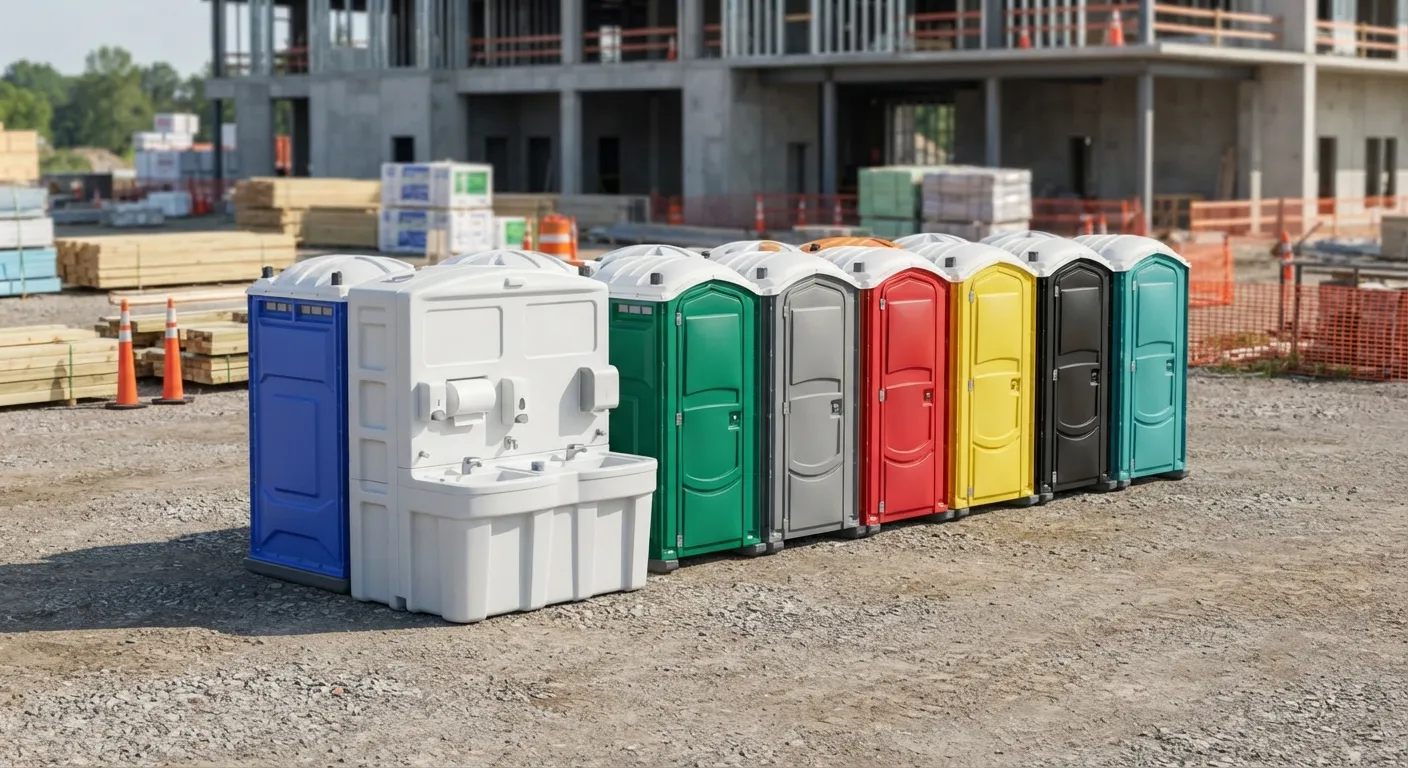
Crew size drives the count more than site size does. A 15 person framing crew needs one standard unit under OSHA 1926.51(c). A 45 person crew crosses into the next tier and needs a toilet and a urinal per 40 workers. Use our how many porta potties do I need guide to run the math against your actual roster, and check OSHA portable toilet requirements if a project manager wants the ratio spelled out for a safety binder. A standard unit holds a 60 to 70 gallon tank and services under ANSI/PSAI Z4.3 assume weekly pickup for up to 10 users across a 40 hour week, so a 20 person crew running two shifts needs closer service than the baseline interval. Sites with an accessibility requirement in the site plan should also budget for ADA Standards 213.2, which calls for at least 5 percent of clustered single-user units to be accessible, never fewer than one. Our ADA accessible porta potty page breaks down clearances if that applies to your permit set.
What Does Portable Toilet Rental Cost for a Construction Site?
Pricing depends on unit type and how long the job runs. A longer rental brings the per-day cost down, but total spend still climbs with duration, so budget by the month for anything past a few weeks. Full breakdowns live on porta potty rental cost, porta potty rental per day and monthly porta potty rental.
| unit | day | week | month |
|---|---|---|---|
| standard | $100-$350 | $130-$500 | $125-$325 |
| ada | $200-$400 | $200-$500 | n/a |
| deluxe | $85-$1200 | $150-$290 | n/a |
Portable toilet rental for construction sites cost also includes delivery, which runs $100 to $500 for a single drop, with monthly service agreements landing between $120 and $420 depending on stop count. If the job also needs debris hauled, a 10 yard dumpster rental or 20 yard dumpster rental pairs well with toilet service on the same delivery run, and our dumpster rental cost page has the weekly and monthly bands for each size.
Does a Construction Site Need a Permit for Portable Toilets?
Placement in the public right of way or on a municipal sidewalk in West New York needs confirming with the city before delivery. We have not verified a specific ordinance number for this jurisdiction, so do not assume a blanket allowance. Check with the city and see our porta potty permit requirements and dumpster permit requirements pages for the general questions to ask before delivery day. Placement also matters for access: a roll-off delivery needs about 60 feet of straight clearance behind the truck, and our porta potty placement guide covers ground clearance for standard units, which measure about 44 by 48 inches on the ground and stand roughly 92 inches tall. If the crew is working through winter, see porta potty in winter for servicing during freezing stretches. Sites in nearby Weehawken, 1.6 miles south of West New York, and Secaucus, 5.7 miles west, follow the same OSHA ratios but should check their own municipal placement rules separately. For general contractors managing scope across Hudson County, our service areas page lists coverage including Fort Lee, 5.5 miles northeast, and Cliffside Park, 3.1 miles northeast.
How fast can you deliver to a West New York job site?
Most standard unit and dumpster orders go out within a day or two of booking, faster if the site already has clear access. Call ahead for same-day needs. If a spill or a failed unit needs immediate attention, our emergency porta potty rental line covers that.
What is the OSHA requirement for toilets on a construction site?
OSHA 1926.51(c) sets the ratio: one toilet for 20 or fewer workers, one toilet and one urinal per 40 workers above that, and one per 50 once the site passes 200 workers. See OSHA portable toilet requirements for the full breakdown by crew size.
Do I need handwashing stations separate from the toilets?
Yes, if crews apply paints, coatings, herbicides or insecticides, OSHA 1926.51(f)(1) requires washing facilities for that exposure specifically. 29 CFR 1910.141(d)(2) also requires soap and towels or a hand drying device wherever washing is provided. Hand sanitizer alone does not satisfy that requirement. See handwashing station rental.
Can I rent a dumpster and portable toilets together for one job?
Yes, most contractors book both on one delivery to save a trip charge. Pair a standard porta potty rental with a roll-off dumpster rental sized to your debris volume, and check dumpster sizes and dimensions before choosing between a 10, 20, 30 or 40 yard box.
What size dumpster does a small construction job need?
A 10 or 20 yard dumpster covers most remodel and small build jobs. Larger new construction or demolition work usually needs a 30 yard dumpster rental or 40 yard dumpster rental. Check what cannot go in a dumpster and dumpster weight limits before loading.
Next step
Get a delivery date
Tell us the address, the dates and the headcount. We size the order and confirm the route.