What do you set up first after a water or sewer outage?
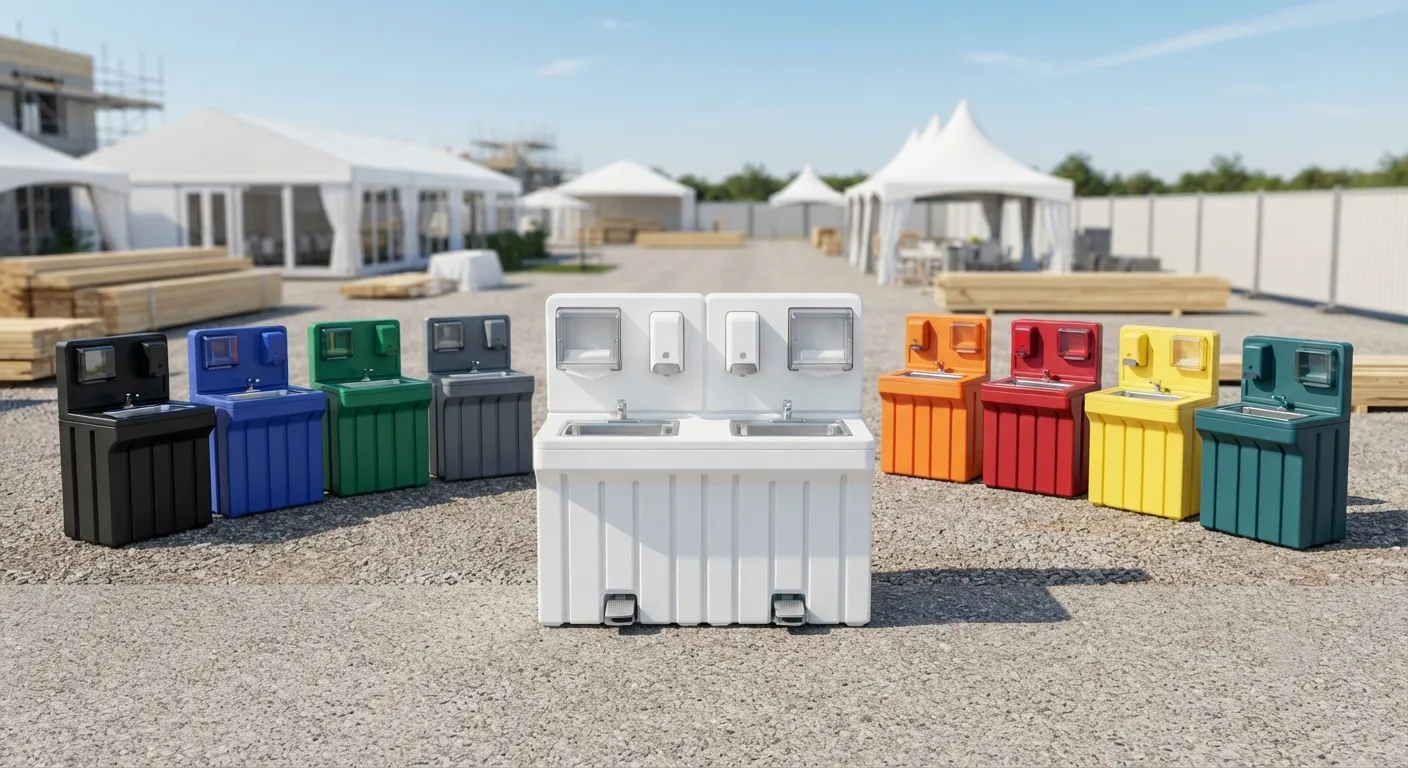
Toilets and a place to wash hands, in that order. A flood or main break takes out plumbing before it takes out anything else, and OSHA 1926.51(a)(1) still applies to any crew working the response: potable water has to be available on site. We pair standard porta potty rental units with a handwashing station rental or a portable sink rental, since 29 CFR 1910.141(d)(2) requires soap and towels or a hand dryer, not just sanitizer. For a shelter running dozens of people through a church hall or a community center in West New York, that combination keeps a bad situation from turning into a health one. If the population is unknown or growing by the hour, our how many porta potties do I need guide gives a workable starting ratio, and we adjust once we see headcount on the ground. Crews handling debris, downed trees or storm cleanup fall under general construction sanitation rules too: OSHA 1926.51(c) sets toilet counts by crew size, one unit for 20 workers or fewer. We staff for whichever population is larger, responders or residents, and add units as the operation grows. Weehawken sits 1.6 miles south of West New York, and when a regional event stretches resources thin we shift trucks between the two without losing response time.
How fast can you deliver during an emergency in West New York?
Same-day in most cases, sometimes within hours if a truck is already staged near West New York. We keep standard units, ADA accessible porta potty options and trailers ready to move because disaster response does not wait for a normal delivery window. A standard delivery fee runs $100 to $500 a day depending on distance and access, and a roll-off delivery needs about 60 feet of straight clearance behind the truck, which matters when streets are blocked by debris or emergency vehicles. If the site has no clear approach we will say so up front rather than promise a drop we cannot make. For larger operations, a restroom trailer rental gives responders and displaced families something closer to a real bathroom, with running water built in. A 2 stall restroom trailer covers a small staging site; an 8 stall restroom trailer handles a larger shelter population. We also bring temporary fence rental to secure equipment staging or keep foot traffic off a damaged structure, and a light tower rental if the outage takes down power along with water. Cliffside Park is 3.1 miles northeast, close enough that a second response crew can reach it inside the same shift if West New York needs everything we have.
What about septic backups or holding tanks during a disaster?
If a septic system floods or backs up, we pump it and can set a temporary holding tank while repairs happen. A residential septic tank is typically pumped every 3 to 5 years under normal conditions, but flooding accelerates that timeline fast, and a full tank during a storm is a hazard, not an inconvenience. Septic pumping runs $150 to $300 for a daytime call, and a weekend emergency call falls in the $50 to $150 range depending on scope. See septic pumping service or emergency septic service for what a callout covers. A holding tank rental bridges the gap while a system is offline, which matters for a household or small business that cannot wait days for a repair crew. We also handle grease trap pumping for restaurants that lose power and need the interceptor serviced before fats, oils and grease reach the 25 percent depth threshold that triggers a pump-out. Storage needs come up too: displaced businesses sometimes need a storage container rental or mobile office trailer rental to keep operating while a building dries out. Fort Lee is 5.5 miles northeast and Secaucus sits 5.7 miles west, both within normal response range if a wider disaster pulls resources across the county line.
| unit | duration | typical price |
|---|---|---|
| standard | day | $150 |
| septic | day | $250 |
| septic | weekend | $100 |
| delivery_fee | day | $150 |
How many toilets does a shelter need?
There is no fixed shelter number in the OSHA tables, but 1926.51(c) uses 1 toilet per 20 people as a workable baseline for any temporary population. A shelter housing 60 people should plan for at least 3 units, more if meals are served on site. Check our how many porta potties do I need page for adjustments.
Can you deliver an ADA unit during an emergency?
Yes. ADA Standards section 213.2 requires at least 5 percent of clustered units to be accessible, and we keep ADA accessible porta potty units in rotation for exactly this reason. Weekly rate runs $120 to $240; daily runs $200 to $400 depending on availability during high demand.
Do you need a permit for emergency placement?
Placement in the public right of way needs confirming with the city. During a declared emergency, rules may be relaxed, but we do not assume that. Check our porta potty permit requirements page and confirm with West New York directly before we set units on a public street.
What if the power is out along with the water?
We bring a light tower rental and can arrange a temporary power pole for staging areas that need lighting or a work circuit. Units themselves do not need power, so toilets and handwashing stations go up regardless of grid status.
Can you handle a multi-day disaster response?
Yes. We extend service daily as needed and can convert a short emergency order into a standing rental once the scope is clear. Monthly standard rates run $125 to $325, which often beats renewing daily orders for a response lasting more than two weeks.
Next step
Get a delivery date
Tell us the address, the dates and the headcount. We size the order and confirm the route.