
What Does OSHA Require for Farm Sanitation?
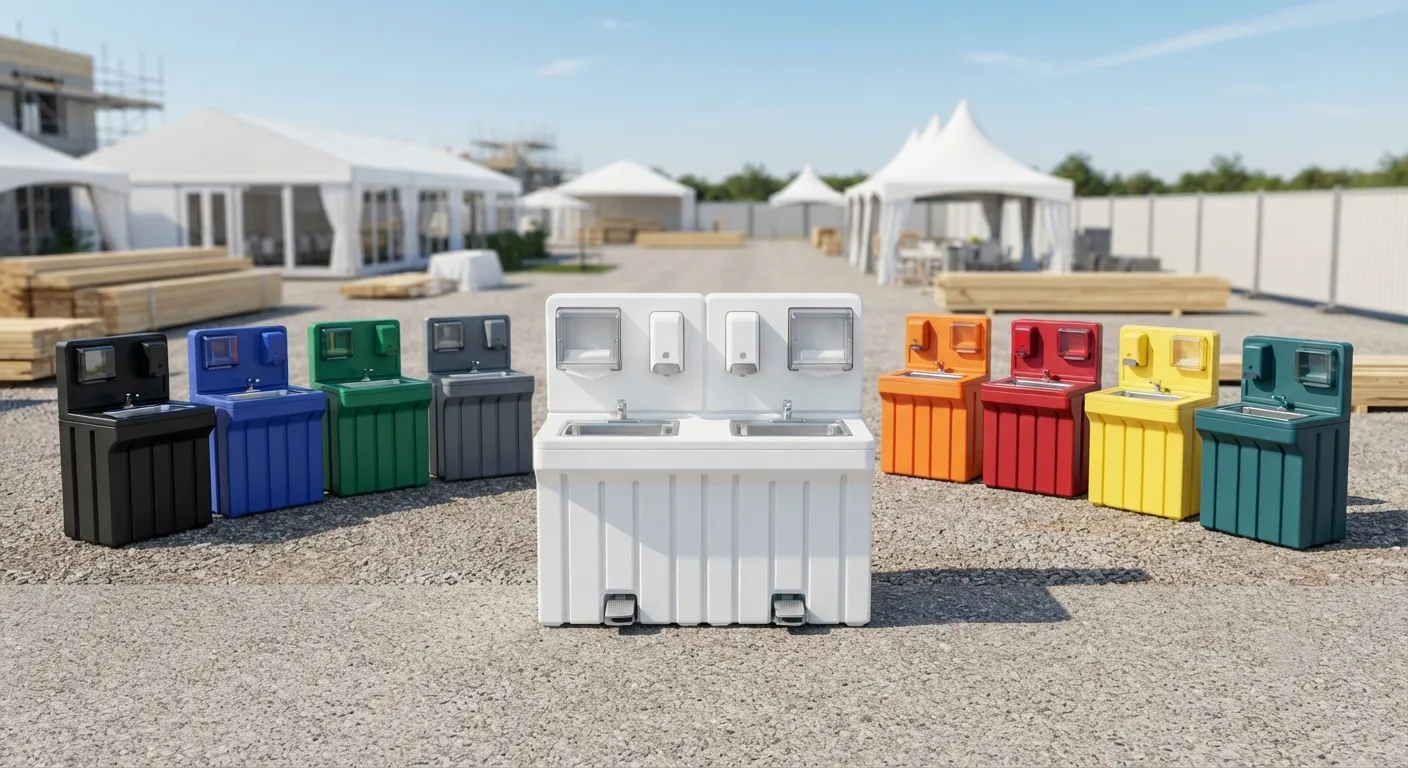
If you've got hand-labor employees working a field in or near West New York, OSHA field sanitation requirements apply directly: OSHA 1928.110 calls for potable water, toilets, and handwashing within a quarter mile walk of every worker, at a ratio of one facility per 20 people. That's tighter than the general construction standard, OSHA 1926.51(c), which allows one toilet for crews of 20 or fewer but scales differently past that point. Farm work often means dispersed crews across acreage, not one fixed site, so we plan placement around field rows, packing sheds, and access roads rather than a single lot. A portable toilet rental for agricultural use typically means multiple standard units spread across a property instead of one cluster near the barn. We also handle handwashing station rental setups separately, since 29 CFR 1910.141(d)(2) requires soap and towels or a hand-drying device, not just sanitizer, at any fixed employee facility. For operations that shift with the harvest, ask about our emergency porta potty rental option, which gets units out fast when a crew shows up sooner than expected. Some growers running events, like a farm stand opening or a pick-your-own weekend, lean on our festival restroom rental setup instead, since visitor traffic looks nothing like a labor crew's needs.
How Many Units Does a Farm or Ag Site Need?
Count workers, not acres. A five-person crew needs one unit under the 1928.110 ratio; a forty-person harvest crew needs two, spaced so nobody walks more than a quarter mile. Use our how many porta potties do I need guide for the math, but the quarter-mile rule for ag work overrides the general placement logic used on most construction sites. A standard unit holds a 60 to 70 gallon tank and stands about 92 inches tall, footprint roughly 44 by 48 inches, so it fits at a field edge, a truck turnaround, or the shoulder of an access road without eating into planted rows. If your site has public visitors alongside laborers, such as a seasonal market, you may need to separate the two: one bank of units for staff near the packing area, another near parking for customers. ADA Standards section 213.2 requires that at least 5 percent of a cluster of single-user units be accessible, never fewer than one, and our ADA accessible porta potty option meets that. West New York doesn't have sprawling farmland like the towns further out, but small growing operations, community garden plots, and seasonal labor crews still fall under the same federal rule. Weehawken sits 1.6 miles south and Secaucus 5.7 miles west if you're coordinating deliveries across a multi-site operation; we run trucks to both. Pricing for standard units by the week runs $130 to $500 depending on count and duration, listed on our porta potty rental cost page.
Where Should Farm Restrooms Be Placed?
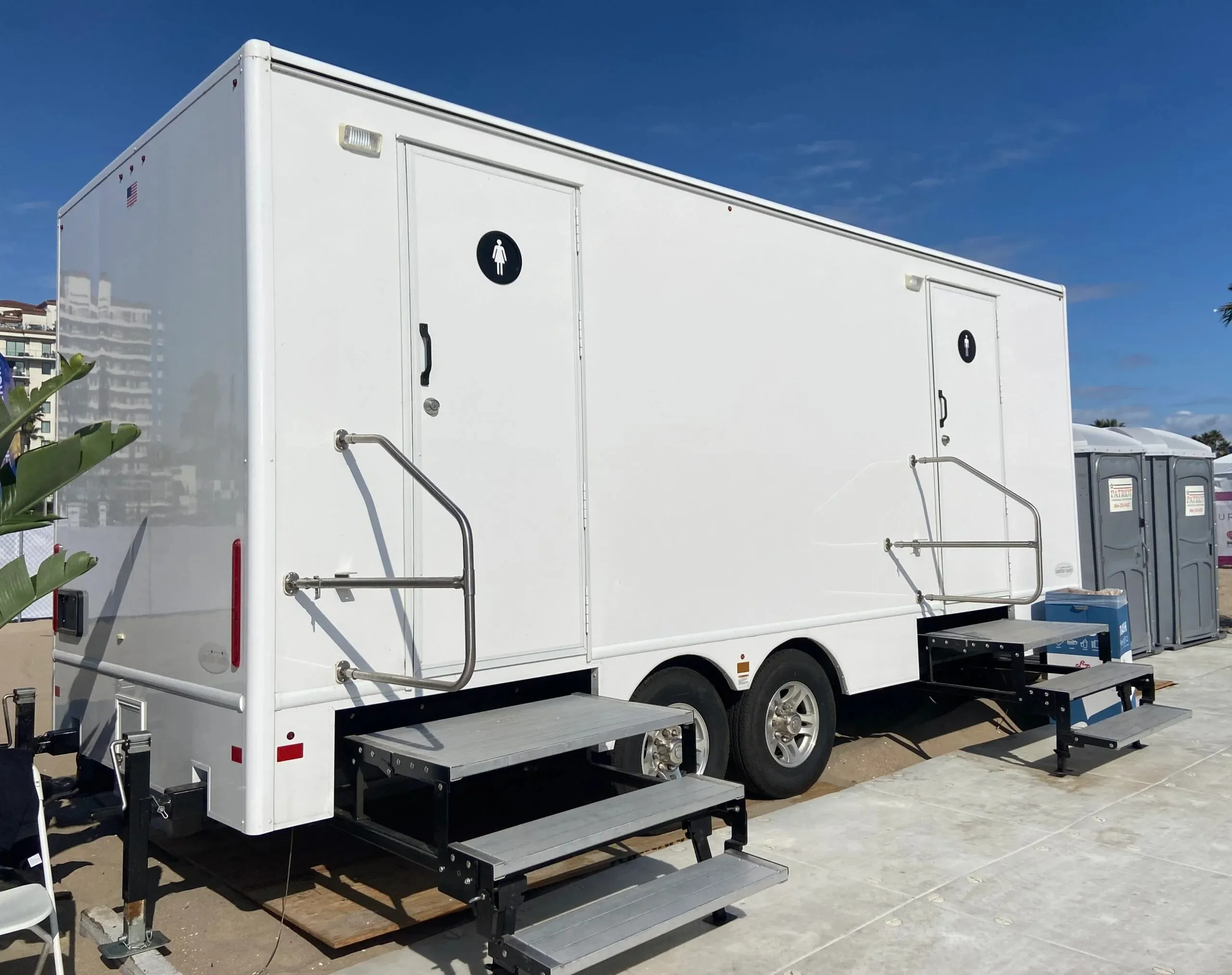
Place units on stable, level ground near the work, not at the property's far edge for convenience. ADA Standards section 302.1 calls for firm, slip-resistant surfaces, which matters on a working field where mud and uneven ground are normal. Our porta potty placement guide covers turnaround room for delivery trucks; a roll-off or restroom trailer delivery needs about 60 feet of straight clearance behind the truck, so plan access along a field lane wide enough for that approach. If your operation also handles produce washing or packing runoff, a septic pumping service or holding tank rental may pair well with your restroom setup rather than tying into a small on-site tank. Grease and wash-water tanks get pumped once solids reach 25 percent of liquid depth, similar logic to a grease interceptor, so don't wait for a backup to call it in. For crews doing any spraying, OSHA 1926.51(f)(1) requires washing facilities specifically where herbicides, insecticides, paints, or coatings are applied, separate from the general field sanitation rule, so a hand station near the spray shed isn't optional if that's part of the operation. West New York's built density means most ag-adjacent sites here are smaller plots or seasonal setups rather than full farms, and our routes already cover Cliffside Park 3.1 miles northeast and Palisades Park 5.4 miles north for growers working across town lines. Check our service areas page for full coverage, and see construction site services if your property also has building work underway alongside the growing operation.
How often do farm restrooms get serviced?
ANSI/PSAI Z4.3 sets a baseline of one service visit per week for up to 10 users across a 40 hour week. Larger crews or longer days need more frequent visits. We schedule around harvest timing so units don't run short mid-week. Ask about adjusting service days seasonally.
Do I need a permit for farm restroom placement?
Placement on private agricultural land usually doesn't trigger the same permitting as a public right-of-way setup, but that needs confirming with West New York directly before delivery. We don't guess on local rules. Check our porta potty permit requirements page for general guidance, then call the city.
Can one unit serve both workers and visitors?
Not ideally. Federal field sanitation rules apply to hand-labor employees specifically, while visitor traffic at a farm stand or market follows a different pattern. We recommend separate clusters, one for crew near the field, one for guests near parking. Talk to us about splitting delivery.
What size tank does a standard unit have?
A standard unit carries a 60 to 70 gallon holding tank, enough for regular use across a service interval. Heavy crew days may need more frequent pumping than the weekly baseline. Ask us about upsizing to a deluxe flushable porta potty for longer stretches between visits.
How far in advance should I book for harvest season?
Book as early as you can once your labor schedule firms up, since harvest timing shifts fast and routes fill. We handle short-notice requests through our emergency porta potty rental line when plans change. Standard lead time gives us room to plan placement properly. Request a quote through our request a quote page anytime.
Next step
Get a delivery date
Tell us the address, the dates and the headcount. We size the order and confirm the route.