
How Do Porta Potties Work?
It's a sealed box, not a mystery. A standard porta potty rental sits on a base about 44 by 48 inches, stands roughly 92 inches tall, and holds a 60 to 70 gallon tank underneath the seat. There's no plumbing, no water line, nothing to hook up. Waste drops straight into the tank, where a blue chemical deodorizer breaks down solids and knocks back odor between services. West New York Porta Pros follows the ANSI/PSAI Z4.3 baseline: one service visit a week for up to 10 users across a 40 hour week. Busy job sites in West New York usually need more frequent pumping than that baseline, which is why we ask about crew size before quoting. A construction worker walking to a porta john rental on a job site off Bergenline Avenue isn't thinking about tank math, but the unit behind him is doing quiet work all week. Curious what a diagram of the tank, vent stack and chemical reservoir looks like? Check our porta potty placement guide for a breakdown of the parts.
How Does a Flushable or Deluxe Unit Work Differently?
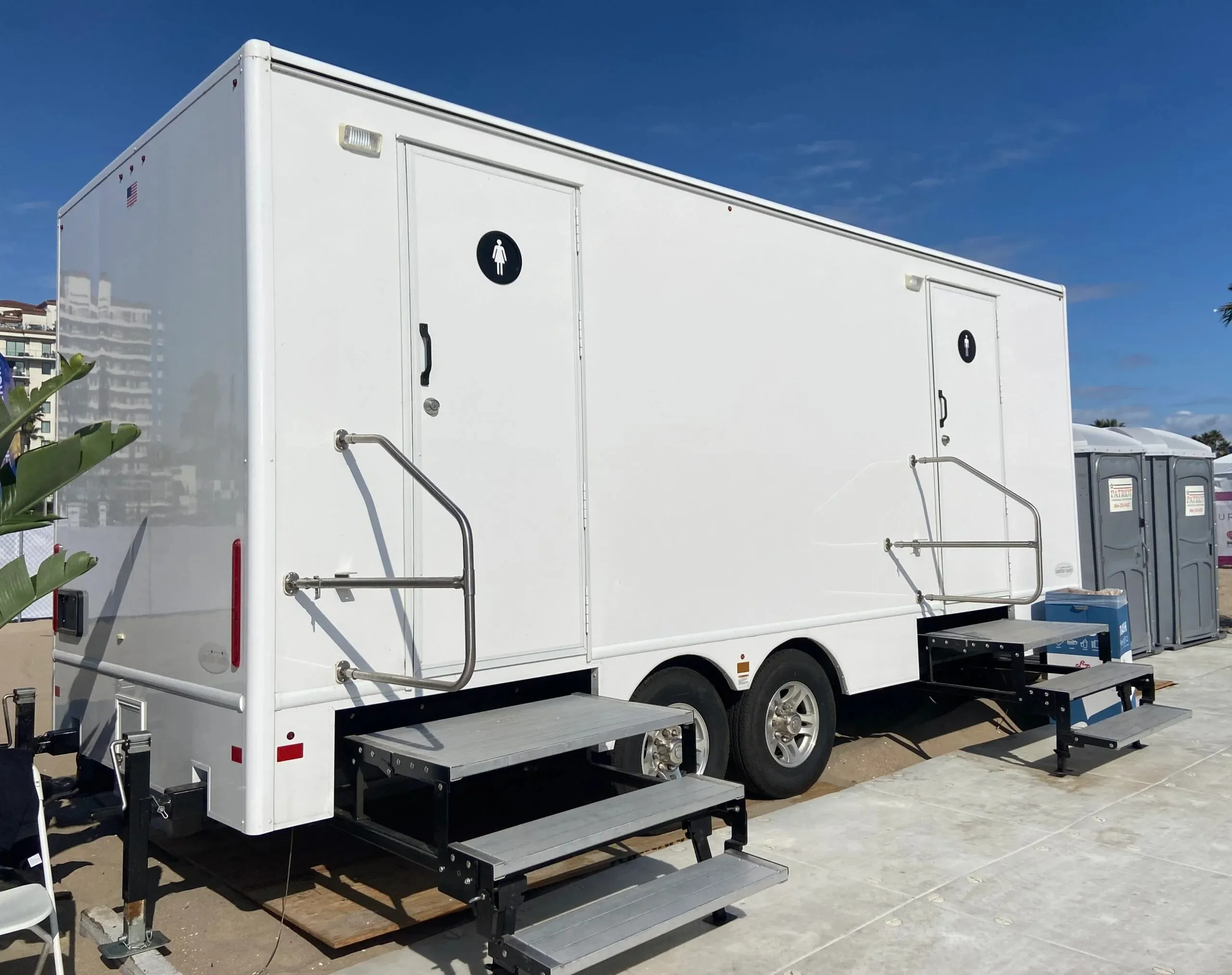
A deluxe flushable porta potty adds a foot pump or hand pump that pulls fresh water from an onboard reservoir to rinse the bowl after each use, instead of relying only on the holding tank below. The waste still collects in a sealed tank, same as a standard unit, but the flush cuts odor and keeps the bowl cleaner between visits. These units run higher than a basic model, typically 150 to 290 dollars for a week depending on features. Some deluxe trailers used for weddings or corporate events step up further, with day rates that can climb past 300 dollars for higher-end builds. If you're weighing a flushable unit against a full restroom trailer rental, the difference comes down to plumbing: a trailer ties into a fresh water tank and a separate gray water tank, while a deluxe porta potty is self-contained. For a wedding near Weehawken, 1.6 miles south of West New York, a wedding restroom rental trailer often makes more sense than a row of deluxe units.
What Chemicals Go Into a Porta Potty and Are They Safe?
Portable toilet chemicals are a blue or green deodorizing fluid, usually a mix of surfactants, fragrance and a biocide that slows bacterial growth in the tank. It's not the same as septic tank cleaning chemicals, which are formulated to break down solids in a fixed underground tank rather than a portable holding tank. West New York Porta Pros techs add the chemical charge during setup and top it off at every service stop, so a renter never has to touch it. If you're searching "portable toilet chemicals near me" because you're managing your own event, don't buy retail tank treatments meant for RVs. They're a different concentration and can cause foaming in a porta potty's tank. Our septic pumping service crews use separate products entirely for home tanks, since a typical residential system holds far more volume and gets pumped only every 3 to 5 years, not weekly. Curious about how the service side works before an event? See how often are porta potties cleaned for the visit schedule.
How Does a Portable Sink or Handwashing Station Work?
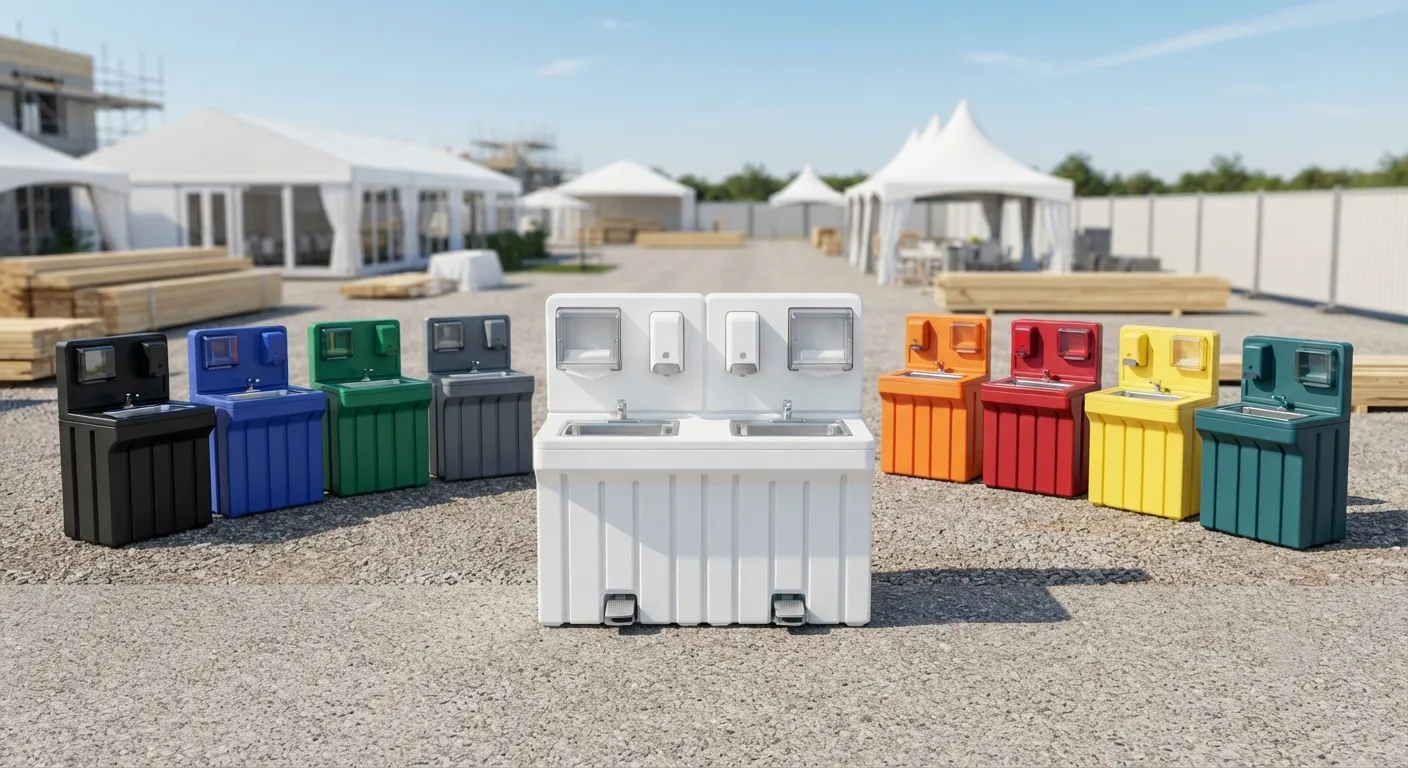
A portable sink or handwashing station rental uses a foot pump or hand crank to draw fresh water from a built-in tank, runs it over the hands, and drains the gray water into a separate holding tank underneath. No electricity, no plumbing hookup, and most units include a soap dispenser and paper towel holder. 29 CFR 1910.141(d)(2) requires soap and towels or a hand-drying device at washing stations. Hand sanitizer alone doesn't meet that standard, which matters on any construction site in West New York running under OSHA rules. If your crew works with paint, coatings, or pesticides, OSHA 1926.51(f)(1) requires washing facilities specifically for that contaminant exposure, separate from general sanitation needs. A portable sink rental placed near a construction dumpster rental covers both the handwashing requirement and general job site cleanup in one delivery. For camping trips, the same low-tech design applies: a camping porta potty and matching sink run on the same self-contained principle, no campsite hookup required.
How many porta potties does a construction site need?
OSHA 1926.51(c) sets the ratio: one toilet facility for 20 workers or fewer, then one toilet seat and one urinal per 40 workers as crews grow past 20. Our how many porta potties do i need guide walks through the math for larger sites.
Do porta potties need a water hookup to work?
No. A standard unit is fully self-contained, with waste dropping into a sealed 60 to 70 gallon tank and no plumbing connection required. That's what makes portable toilet rental placement fast on sites without utilities.
Can I get an ADA accessible unit that works the same way?
Yes. An ada accessible porta potty uses the same tank and chemical system, just built larger. ADA Standards 304.3.1 calls for a 60 inch turning circle inside, and ADA Standards 213.2 requires at least one accessible unit in any cluster.
How does pumping and cleaning actually happen?
A vacuum truck connects to the tank, pulls waste and rinses the interior, then a tech restocks the chemical charge and supplies. Full detail is in how often are porta potties cleaned.
Do camping porta potties work the same as job site units?
Basically, yes. Same sealed tank, same chemical deodorizer, just smaller footprint for tighter sites. See camping porta potty for sizing options suited to a campsite instead of a work crew.

Next step
Get a delivery date
Tell us the address, the dates and the headcount. We size the order and confirm the route.